During the 1830s British hospitals were a far cry from the standard of healthcare we expect at all. With a lack of institutions to cater for the seriously ill, those who did receive treatment would not necessarily benefit from being hospitalized, as the care available was hardly an improvement on being nursed at home. The Victorian period saw a vast growth in the number of hospitals in Britain and these infirmaries became increasingly involved with the education of health care and medical professions. Yet despite the growing role of hospitals, there were wide variations in the quality of medical services available. The types of hospitals that were available, differ from the celebrated specialist institutions served by famous surgeons to the appalling workhouse infirmaries where the patients were looked after by untrained pauper nurses. the buildings, beds, waiting rooms and even ambulances that served the Victorian people, was the healthcare mostly available to the rich rather than the poor.
The Victorian Nurse
Wednesday, April 18, 2012
Wet Nursing
Working Conditions
La Nourrice
When I began to work at the Founding Hospital in London, I had to wear certain type of clothing, which seemed to be very similar to the rest of the nurses. As a female nurse we wore a soft crinoline skirt with a full apron. Pinafores, still collars, puffy sleeves, and removable cuffs describe my uniform perfectly! Nursing was 1 of 3 medical professions which were opened to the middle-class women. The other two choices; midwifery and doctoring didn’t interest me as much so I decided to stick to nursing. A doctor’s profession was characterized to only belong to males. We women were to stay within the will that God had assigned to us. Just like Florence NIghtingale looked up to God, i looked up to her. She was a very talented and brave women. All the patients loved Nightingale because was so caring. Not only was she a cared for nurse but she also set almost all nursing systems and techniques we use. She is my inspiration of becoming a better nurse each and every day.Relations with my patients
Many of the other nurses do not act as I do. They are very blunt and not soft spoken at all. I hate to say that the treatment of our patients here is somewhat odd. It is more than just a clinic for the ill, some of my fellow peers enjoy having sexually relations with these battered and beaten men, but mostly the injured soldiers who feel as if they nee company since they are away from home. The men don’t seem to mind though and will even suggest it from time to time. I try to treat my patients well and nurse them just like Nightingale, but mostly just like my title states. They wish for me to provide the same feeling of my walls that my peers do. When the patients start getting out of control and start taking it a little too far, I curse at them and remove their hands from my garments. Fellow nurses always tell m often to join in with them, but I simply just amuse them by saying "maybe next time"... works every time.
Common Diseases
Florence Nightingale
In 1820, the mother of nursing, Florence Nightingale was born into the wealthy family of William Nightingale and Fanny Nightingale. She was baptized in the Church of England and as a teenager she would write in her diary about how Jesus Christ called her to His service. At the age of 25, Florence told her parents she wanted to become a nurse. Her parents didn’t agree with her decision because nursing had a reputation of being associated with alcoholism and prostitution. Even though her parents didn’t agree with her decision, Florence kept serving Jesus and became a Nursing Superintendent in London in 1853.
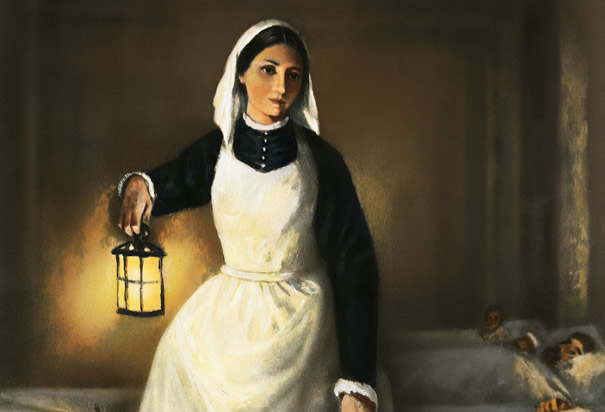
Florence Nightingale is known most for helping wounded British soldiers in the Crimean War. To these soldiers, she was known as ‘The Lady with the Lamp’. Nightingale, along with 38 other nurses, took care and tried to cure the soldiers’ wounds, but this became hard to do because the condition of the hospital was dreadful. She fought to get better conditions for the soldiers since there were no medicine supplies, no furniture, no operating tables, and very few beds. She suggested that if there was better sanitation in the hospital, there would be fewer deaths due to infections and preventable diseases. Florence Nightingale laid in peace in 1910at the age of 90 but left many contributions toward the nursing field.
Subscribe to:
Comments (Atom)